momü object
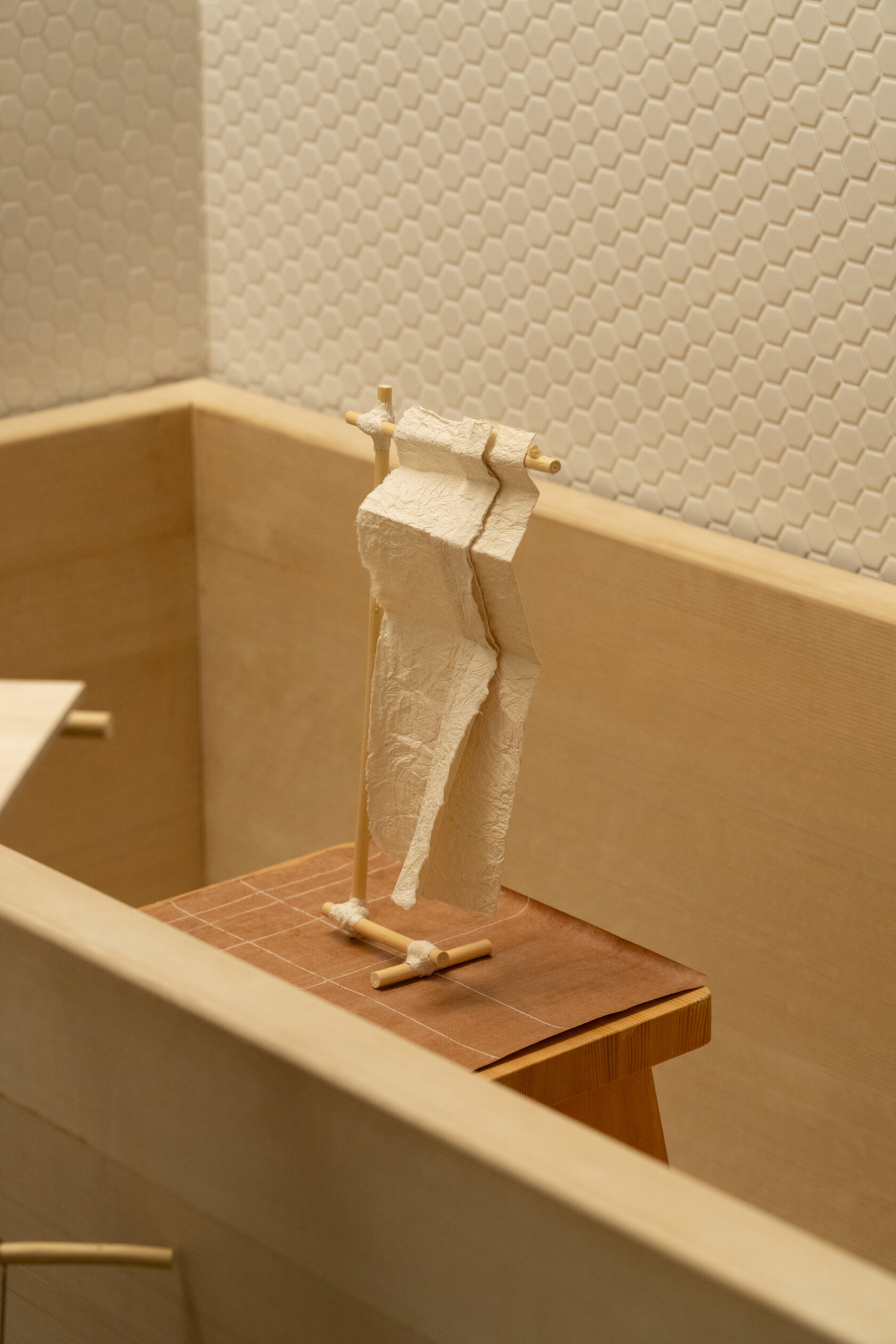
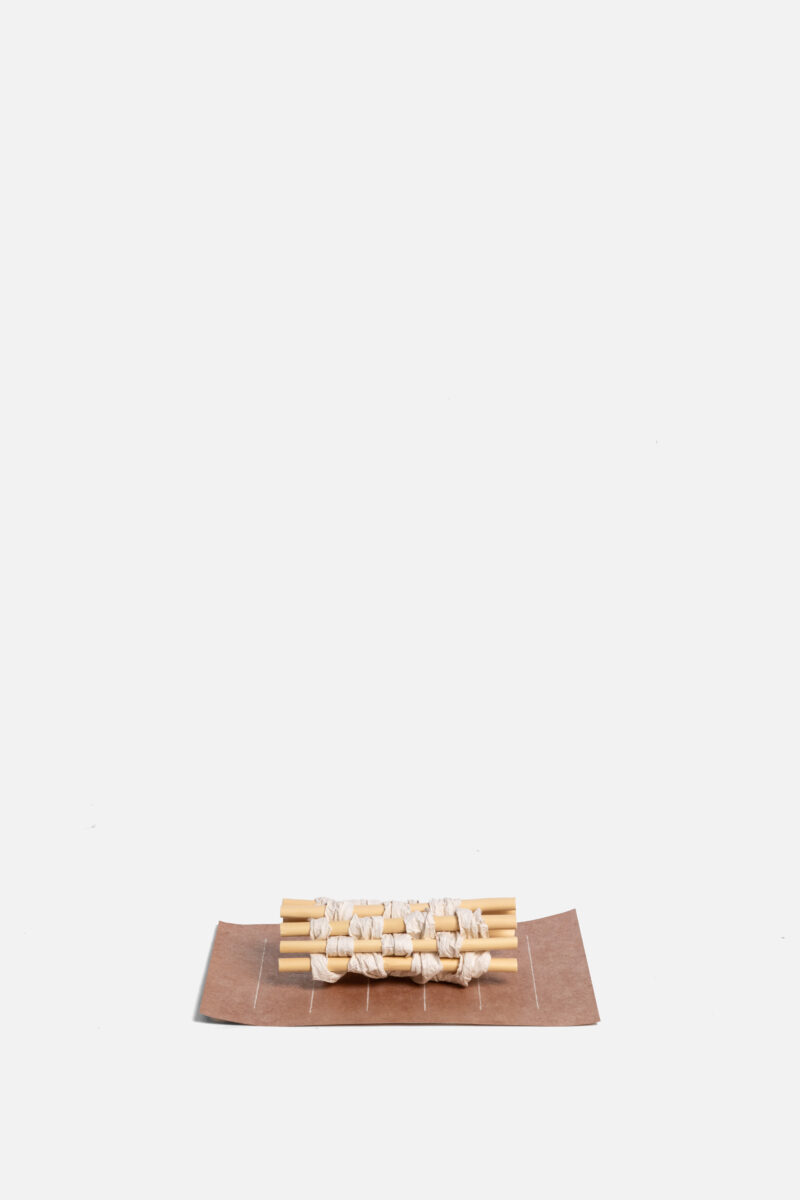
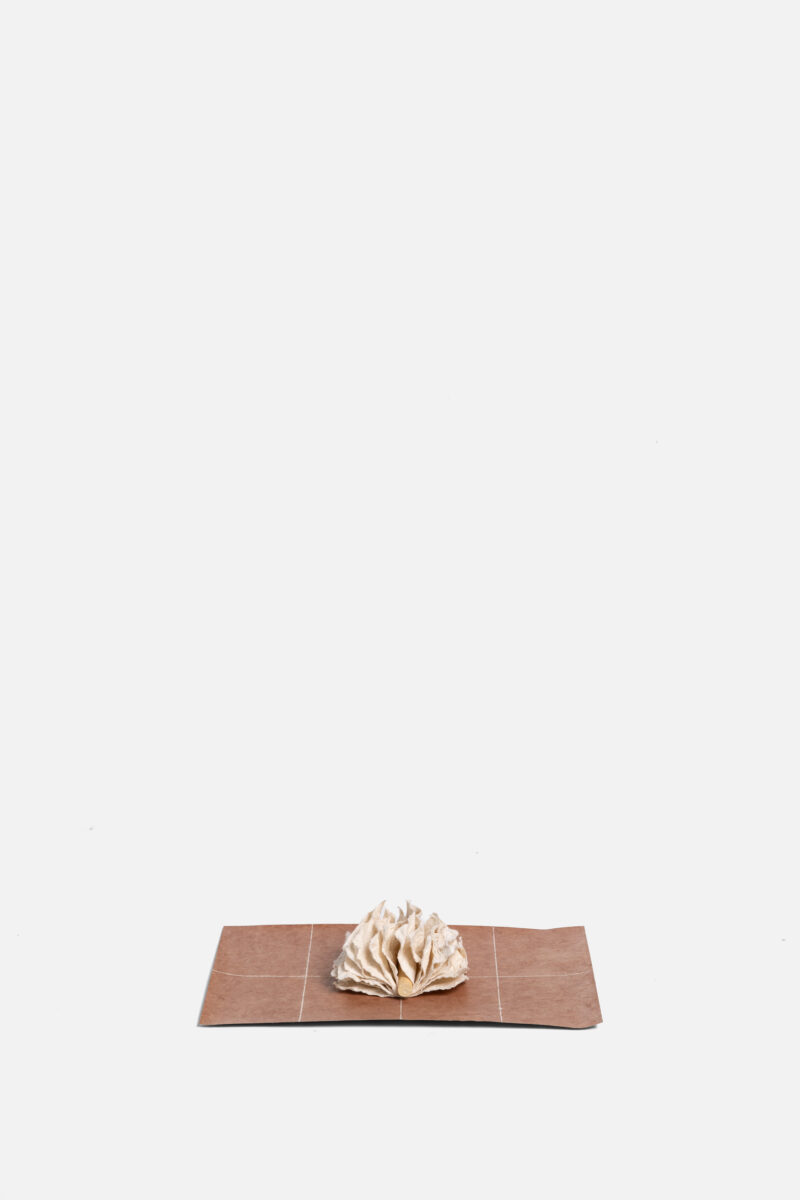
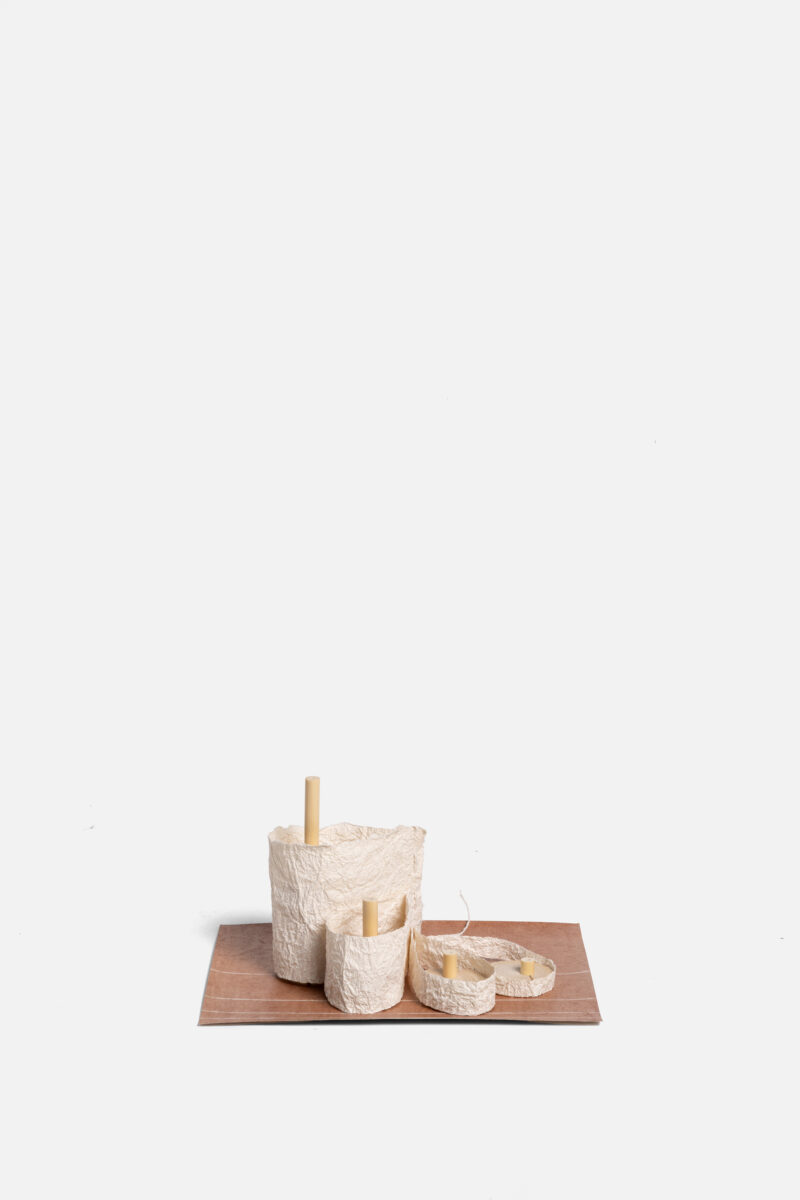
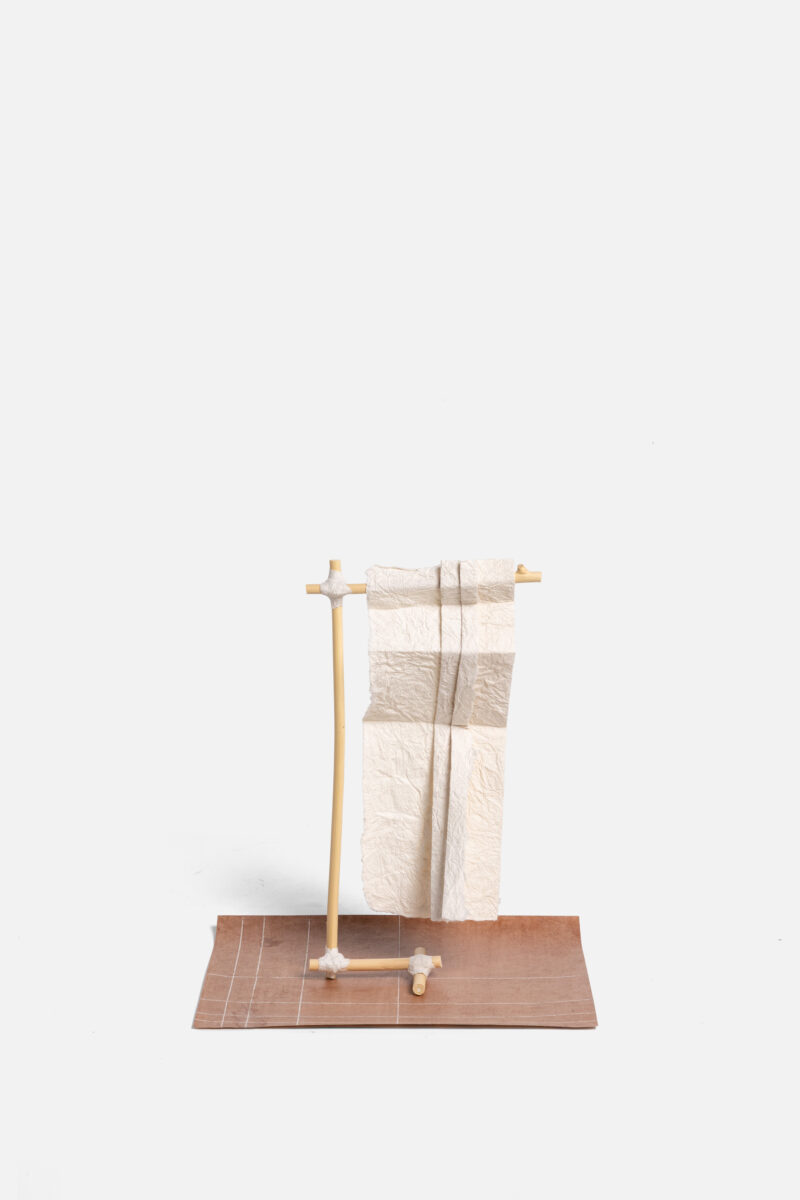
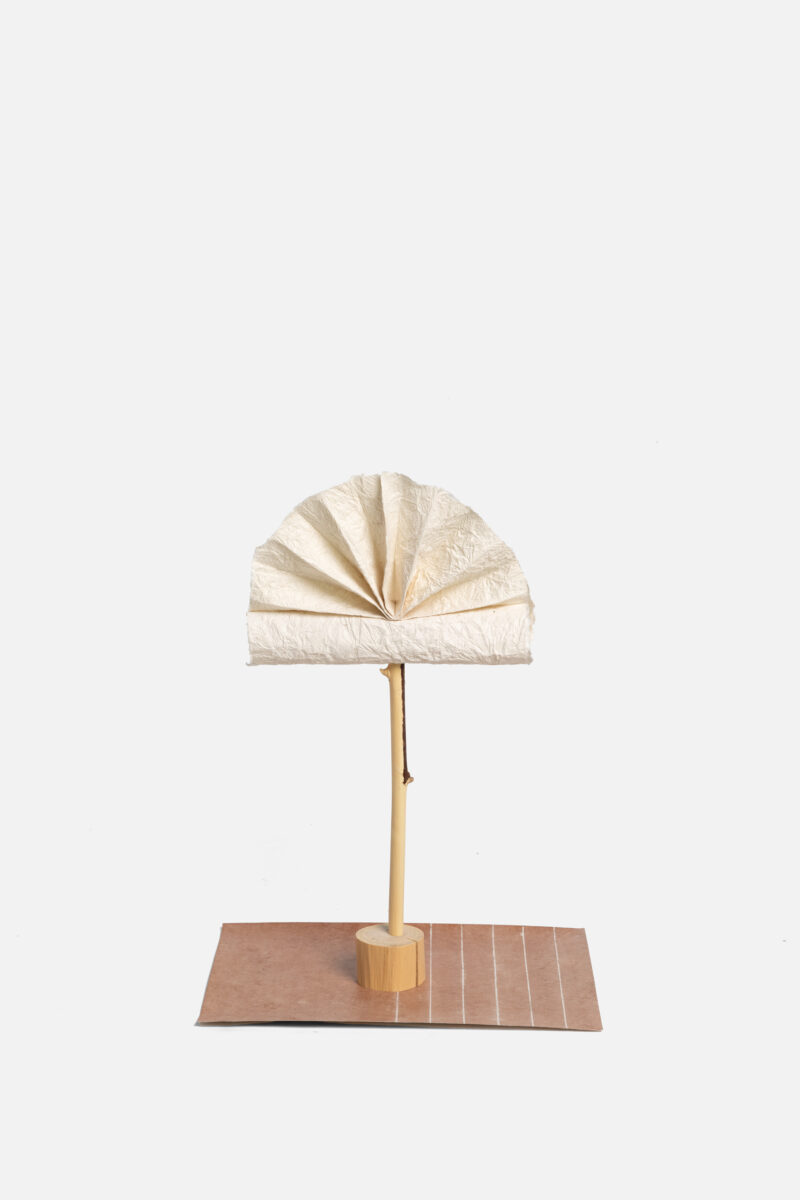
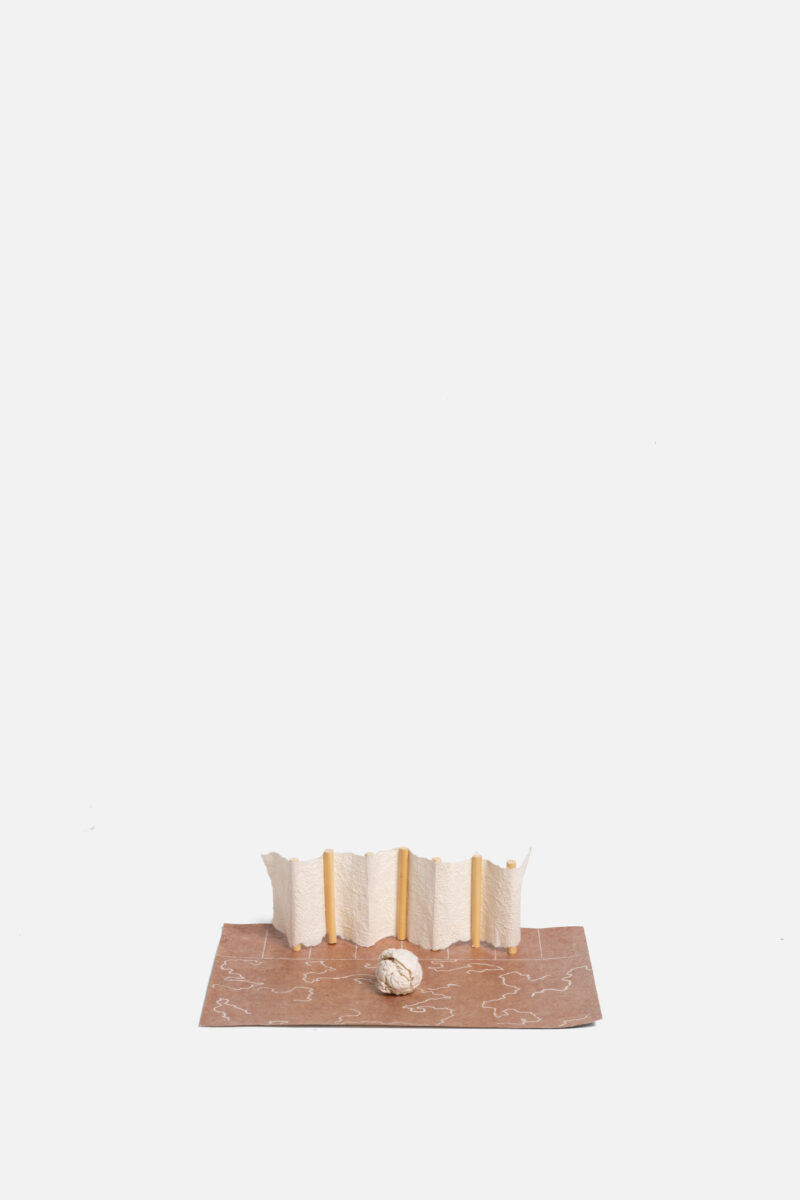
This series of objects using crumpled kozo paper emerged from a collaboration with YŌRAI, launched by washi wholesaler Oue. The process of making crumpled paper involves numerous factors, including conditions of raw materials, water quality, papermaking technique, crumpling, the condition of konjac used for surface treatment, dye materials and methods, each involving manual craftsmanship. The final paper’s finish varies based on the interplay of these elements, making it extremely difficult to control the outcome. YŌRAI released this paper as momü after repeated trial and error with artisans until a satisfactory result was achieved. However, reaching this point produced numerous test sheets regarded as “mistaken.” Isamu Hazama was provided with these and reproduced them as objects, resulting in this work.
The idea originated from a question: Could we create a sample book for momü? While ensuring consistent quality, momü finds its value as washi paper by allowing a certain degree of variation—such as differences in the texture of the crumpled finish and the individual character of each sheet. Therefore, rather than creating a uniform sample book, he decided to make a set of objects that could function as a “sample book” by embracing individual characteristics.
This series involves deconstructing papers cut to roughly A4 size and reassembling it as a three-dimensional form within space. Compared to modern paper, washi is produced in smaller units, leading to batch-to-batch subtle differences. Frequent changes in materials, improvements in manufacturing methods, and discontinuation of specific lines make it difficult to provide a fixed sample book sustainably. Therefore, as wholesalers, Oue have responded to customer inquiries by providing samples of currently available papers in A4 size. This object series takes “A4 as a sample book” as a constraint and explores the three-dimensionality intrinsic to crumpled paper.
The work is combined with kozo harvested by the designer himself behind his studio. Momü is made from kozo. The elements combined into the objects—wood, bark, fibers before becoming paper—differ in appearance yet are the same material, kozo. By juxtaposing this kozo in different states, one gains a sense that the object in front is ultimately in a temporary state. It is both material and an expression that speaks for itself. Objects carry the processes and contexts that led to their current condition, while also holding the potential to evolve into something else.
─
- made by
- Isamu Hazama
- year
- 2026
- material
- 楮